Japan and China: What are the differences in tourist souvenir products? —Chinese internet


Enlarge
Recently, an article detailing the differences in souvenir products at tourist spots in Japan and China was published on China's SNS, Xiaohongshu (RED), generating a buzz. The photo shows a souvenir shop in Xiamen.
(1 / 2 images)
Recently, an article detailing the differences in souvenir products at tourist spots in Japan and China was published on China's SNS, Xiaohongshu (RED), generating a buzz.
【その他の写真】
The female poster stated, "When you visit souvenir shops in Japanese tourist spots, you sometimes notice differences from what is sold in Chinese tourist spots. It's not a simple matter of good or bad; there are two completely different business philosophies at play."
Furthermore, regarding Japanese souvenirs, she mentioned that "they place great importance on being region-limited," and "many products are only sold in that specific city, that specific shrine, or that specific commercial area." She gave examples like Fushimi Inari amulets and Uji matcha sweets, stating that these are difficult to purchase once you leave those areas.
She also explained, "Even within the same tourist spot, there are significant differences in product lineup and design from shop to shop, and while there are some similar products, so-called copy-pasted items, overall, each shop handles unique products." She added that because Japanese souvenirs often have an element of "gifts," many are small, easy to carry, and practical.
Next, regarding Chinese souvenirs, she pointed out that "homogenization is noticeable, including magnets, bracelets, and charms sold at street stalls." She analyzed, "Many products are sourced from the same wholesale market, and even souvenirs purchased in Huangshan, Xiamen, and Mount Tai have similar designs, with many stalls selling the same items, and 'photogenicity' or commemorative value is prioritized over practicality."
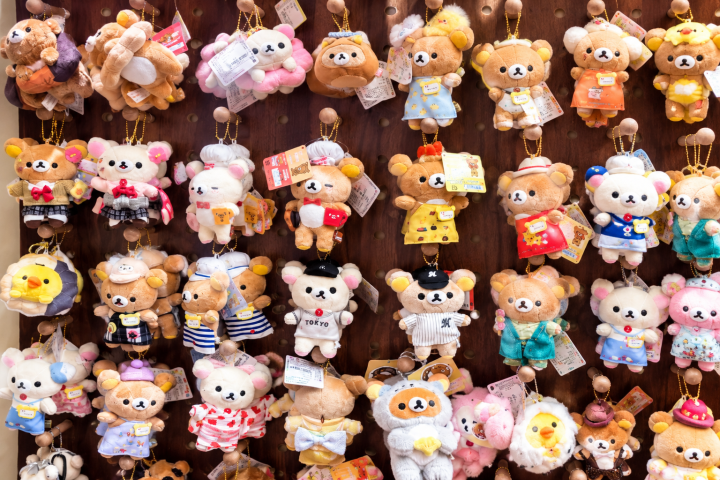
However, she added that in recent years, original and creative products that delve deeply into local history and culture have also appeared in museums and tourist/cultural facilities, and their design and quality are also increasingly improving.
The woman also mentioned that there are differences in the shops' business practices. Regarding shops in Japanese tourist spots, she introduced that "prices are basically clearly displayed, price negotiation is rarely done, and shops place more importance on their long-term reputation," while shops in Chinese tourist spots "have greater price flexibility and price negotiation is common."
In response to this post, Chinese internet users commented, "What Japan values is simple design and meticulous service. What China values is ease and looseness of administrative management, and uniformity," and "Japan is similar to Europe, with many workshops that have been around for 100 years in its towns. China is similar to the United States, where once a brand becomes famous, they invest in it to maximize scale."
On the other hand, opinions such as "If you go many times, you'll realize that Japan is also heavily homogenized," "I think Japan is also quite heavily homogenized. Even if you don't go to Uji, Uji matcha products are sold everywhere in Kyoto and Kobe. Of course, there are limited edition items for each tourist spot, but..." "I think areas like Kiyomizu-dera and Fushimi Inari are completely commercialized. There's not much difference from domestic (Chinese tourist spots)," and "It only feels fresh the first time you go; in the end, neither is that different" were also seen.
Furthermore, users reported personal experiences such as, "I bought a wind chime at Ninen-zaka and Sannen-zaka, and when I got home, the exact same item was being sold very cheaply on Taobao (a Chinese e-commerce site)," and "I bought my daughter a 200 yuan (approximately 4700 yen) wooden kitten in Kyoto, and after returning home, the exact same item was being sold at a street stall for 20 yuan (approximately 470 yen)."
On the other hand, comments were also scattered mentioning elements other than the products, such as "Even if they look similar, the quality is different," and "What's important about Japanese souvenirs is that they are region-limited. 99% of domestic souvenirs can be bought on Taobao, so they don't feel like a souvenir," and "In Japan, a desire to buy things springs up. I hate even looking at shops in Chinese tourist spots," "Chinese shops often overcharge. And on tours, you're forced to spend money," and "In Japanese shops, you won't find staff smoking in front of the store." (Translation/Editing by Kitada)
Related News
India announces Olympic bid, overseas media says 'many challenges remain'
CGTN Japanese
2026/10/13
AI short dramas become a new highlight of China's service exports.
CGTN Japanese
2026/10/13