2800 years ago, a bronze vessel gifted to a spouse, with a surprising message inscribed on it.


Enlarge
More than 2800 years ago, during the late Western Zhou Dynasty in China. The ruler of Qi commissioned the casting of a special bronze vessel upon taking Liang Nü, the eldest daughter of the ruler of Guo, as his wife.
(1 / 4 images)
More than 2800 years ago, during the late Western Zhou Dynasty in China, the ruler of Qi commissioned the casting of a special bronze vessel upon taking Liang Nü, the eldest daughter of the ruler of Guo (Guo-guo), as his wife.
【その他の写真】
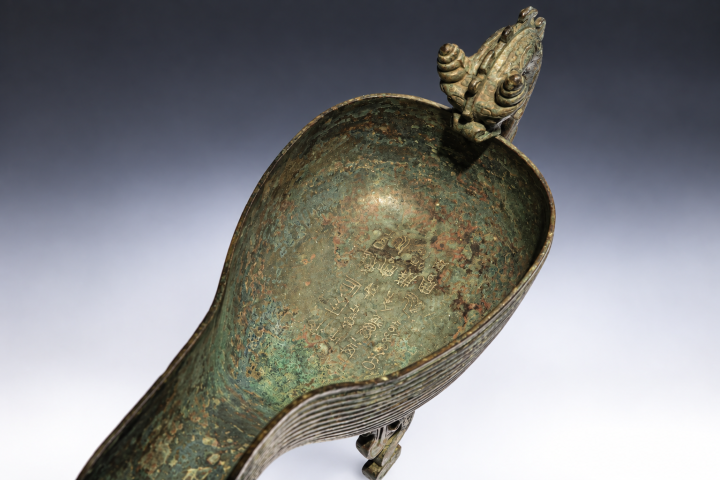
That is the bronze vessel known as "Qihou Yi (Seikō-i)". Its height is 24.7 centimeters and its weight is 6.42 kilograms. At that time, an Yi was a vessel used for scooping water. However, in aristocratic society, it was not merely an everyday item but also an important instrument for etiquette.
The "Qihou Yi" is so exquisitely crafted that it hardly seems like a practical item. The spout for pouring water is raised high and shaped to facilitate the flow of water. A flood dragon (Jiaolong) is depicted on the rear handle, designed so that the dragon's mouth holds the body of the vessel. Furthermore, there are four dragon-shaped legs at the bottom, firmly supporting the entire vessel.
What is particularly noteworthy about this bronze vessel is the 22-character inscription at the bottom of the vessel. Its content roughly means, "The Marquis of Qi made this precious Yi for Meng Ji Liang Nü of the State of Guo. May it be passed down forever and cherished by generations of descendants."
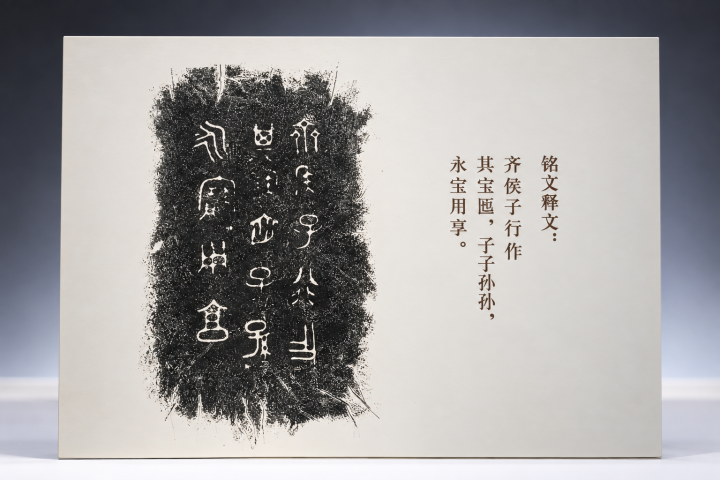
Although it is only 22 characters, it condenses the feelings of the people of that time. It's not just about feelings for the woman who would become his wife. One can also discern a wish for the prosperity of the family lineage, and an attitude that values the relationship between the two states.
During the Western Zhou period, marriages among royalty and aristocracy had a significantly different meaning from modern marriages. This is because, in addition to being a union between a man and a woman, they also played a role in strengthening relations between families and forging political ties. Considering this, this Yi is not merely a "wedding gift". In one bronze vessel, the bond between a couple, the future of a clan, and even the political significance of the marriage are inscribed.
So, how did people of that time use this Yi?
In an era before running water, the Yi was often used in combination with a vessel called a "Pan". Before and after banquets, a ritual called "Woguan no Rei" (the ritual of washing hands) was performed by aristocrats.
One person held the Yi and poured water, while another used the Pan to receive the water. Even handwashing, which we now do casually, was an important ritual in the aristocratic society of that time, demonstrating status and etiquette. It is said that especially when welcoming high-ranking guests, the host's father himself would hold the Yi and pour water, and his son would offer the Pan, thereby showing respect to the guest.
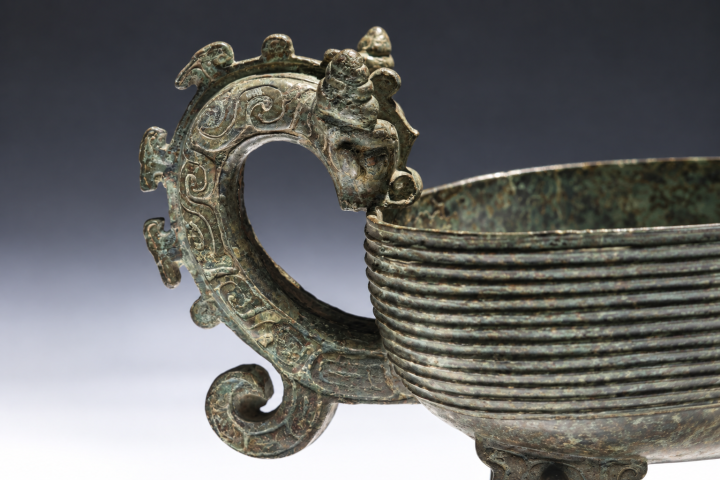
The "Qihou Yi", used in such ceremonial settings, must have symbolized not only practicality but also authority and etiquette. Currently, this bronze vessel is housed in the Shanghai Museum. The blue-green rust covering its surface tells the story of over 2800 years of time's passage. (Translation and Editing / Kobayashi Teruya)
Related News