"Japanese cars don't break down, which is actually a problem," Korean media highly praises the new RAV4 = Mixed reactions online


Enlarge
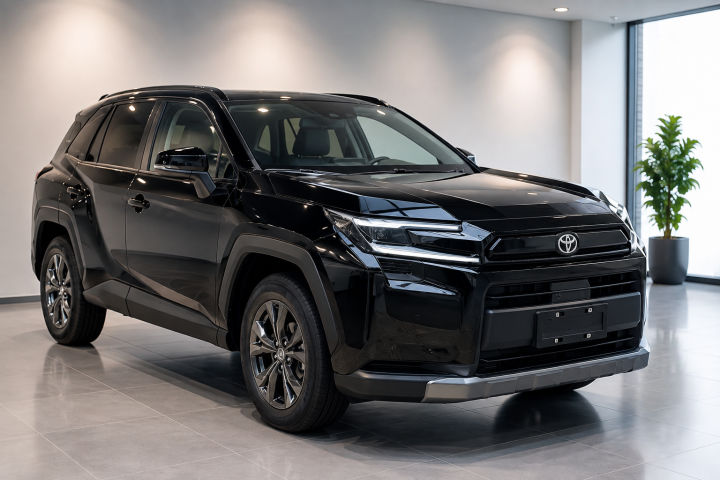
On August 25, 2026, Korean media Maeil Business Newspaper published an article introducing the new Toyota RAV4 Hybrid, evaluating it as, "The Toyota RAV4 Hybrid is a prime example of a Japanese SUV that doesn't cause trouble." RAV4
(1 / 2 images)
On August 25, 2026, Korean media Maeil Business Newspaper published an article introducing the new Toyota RAV4 Hybrid, evaluating it by saying, "Japanese cars rarely break down, which is actually a problem. The Toyota RAV4 Hybrid is a prime example of a Japanese SUV that doesn't cause trouble."
【その他の写真】
The article stated, "Imported cars with frequent breakdowns and high maintenance costs become a source of stress, but on the other hand, they provide a good excuse for replacement. However, in this regard, Japanese cars are a minus point." This means that they are so durable and rarely break down that it's "actually a problem." For consumers considering switching to electric vehicles (EVs) but hesitant due to charging stress or fear of fire, Japanese cars are said to be one option.
According to the article, the RAV4, along with the Camry, has elevated Toyota to a prestigious brand for hybrid vehicles in the Korean imported car market. Toyota Korea recently launched the "All New RAV4," a fully redesigned sixth-generation model, to counter the EV popularity led by Tesla's "Model Y" and maintain its leadership in hybrid vehicles. As soon as it was launched in Korea, its product strength and competitiveness were recognized, and it was selected as the "Car of July" by the Korea Automobile Journalists Association.
The "Car of the Year Selection Committee" under the Korea Automobile Journalists Association reviews new cars and minor change models launched from the 1st to the end of each month and announces the "Car of the Month."
The All New RAV4 received 8.3 points out of 10 in the categories of driving performance/energy efficiency, safety/advanced driving technology, and overall product strength/purchase appeal. It received 8 points in the design/perceived quality and price competitiveness/product value categories, and 7.7 points in the infotainment/connected system category.
The price, around 50 million won (approximately 5.76 million yen), is by no means cheap, and the article pointed out that it's a level where it wouldn't be surprising to hear people say, "If I'm spending that much, I might as well get a Tesla Model Y." However, it praised the car, saying, "Instead, it boasts excellent durability, low maintenance costs, and high service quality. It incorporates many features that Koreans prefer, enhancing convenience. The more you drive it, the more value you get beyond the purchase price."
In response to this article, positive comments from Korean netizens included: "I've driven a small Toyota hybrid, and it really doesn't break down; its durability is excellent," "My father has been driving a first-generation Prius for over 10 years, and it really doesn't break down," "We have to admit that Japanese products are superior," and "Even if you dislike Japan, you have to acknowledge its good points and learn from them."
On the other hand, many negative comments were also seen, such as: "Japanese people don't buy Korean products, so why do we need to go out of our way to buy Japanese cars?" "Let's buy Korean cars. The gap between foreign and domestic cars might have been big in the past, but now their quality, durability, and price are world-class and economical," and "I admit the durability, but do Japanese people not learn art in elementary school? The designs of Japanese cars released in Korea are all toy-like. The interior is also tacky and two-dimensional." (Translation/Editing by Mae)
Related News