Chinese Table Tennis Suffers 'Historic Crushing Defeat' at WTT Yokohama Champions, Its Causes Analyzed - Hong Kong Media


Enlarge
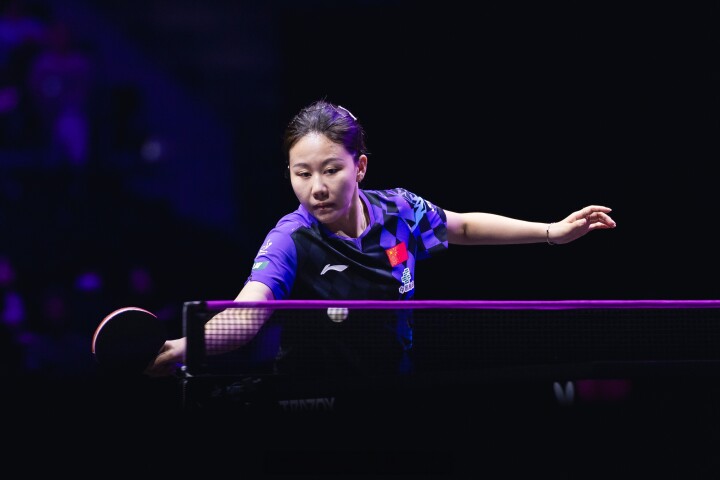
China's national table tennis team suffered a "historic crushing defeat" at the WTT Yokohama Champions, which concluded on August 9, failing to win a single gold medal. Hong Kong media outlet Hong Kong01 recently published an article analyzing the causes of the Chinese table tennis team's defeat.
(1 / 2 images)
China's national table tennis team suffered a "historic crushing defeat" at the 2026 World Table Tennis (WTT) Yokohama Champions, which concluded on the 9th, failing to win a single gold medal. Hong Kong media outlet Hong Kong01 recently published an article analyzing the causes of the Chinese table tennis team's defeat.
【その他の写真】
At the WTT Yokohama Champions, Japan's siblings Tomokazu Harimoto and Miwa Harimoto won the men's and women's singles titles respectively, achieving the historic feat of simultaneous sibling victories at a major international tournament. Although both were born in Japan, their parents were former Chinese national team players, and both acquired Japanese citizenship in 2014. In contrast to the Harimoto siblings, China at the WTT Yokohama Champions saw all four participating players in the men's event successively eliminated, missing out on the top 8 for the second consecutive tournament, following the US Smash.
In the women's singles, three Chinese representatives advanced to the semifinals, but they were successively defeated by Miwa Harimoto, missing out on the championship. The Chinese team ended this tournament with zero gold medals and one women's runner-up finish. Table tennis is considered China's "national sport," and has dominated titles in major tournaments for many years, so this crushing defeat came as a great shock to people. Given that China's team performance, including that of its top players, has been poor in many recent tournaments such as the US Smash, this defeat is by no means accidental, and structural causes must be acknowledged.
The most significant cause is a gap in talent development. After veterans who performed as top players retired, the new generation has been unable to fill the void, and the gap has persisted. Ma Long, a top male player, is gradually retiring from international competitions, and Fan Zhendong has moved to Germany. The mid-tier generation sees Wang Chuqin fighting a lone battle, while Lin Gaoyuan and Liang Jingkun lack consistency in international matches. The skill gap between China's new generation of players and the world's top contenders is clear. The former three-tiered "medal-winning insurance system" where "veterans held the line, mid-tier players defended, and newcomers attacked" has disappeared, and competitiveness has plummeted.
Furthermore, another major problem is the excessive concentration of resources on top players and the severe lack of practical match opportunities for new players. With the aim of securing Olympic berths and maintaining world rankings, China prioritizes its absolute aces for participation in important tournaments. Excellent coaches and sparring partners are also mainly assigned to established players. Young players are only able to participate in lower-level tournaments, and have no opportunities to directly compete against the world's top players. Since the coaching staff prioritizes maintaining results and heavily relies on established players even when their form is declining, the current situation is that new players are left with a severe lack of experience on big stages.
The lack of diversity among players is also a problem. Almost all Chinese men's first and second-tier players use the shakehand grip, with less than 10% using other styles. In contrast, in Japan, over 24% of players use non-shakehand grips. Foreign teams have observed and analyzed China's matches for many years, and have developed complete strategies to defeat them. Furthermore, due to the demanding WTT schedule, training camp time has been halved compared to before, and players are unable to correct their weaknesses, leading to fixed flaws. Moreover, the glory of the past "invincible myth" has become a psychological burden for young players. Young foreign players, unburdened by "past glories," can play boldly, giving them a psychological advantage.
Simultaneously with the emergence of these structural problems in Chinese table tennis, the global table tennis landscape has also changed qualitatively. Japan, South Korea, and Europe have seen their long-term youth development efforts bear fruit, and have begun to leap towards a situation where "everyone is a strong contender" rather than relying on "individual star players." For over a decade, Japan has implemented age-group specific development programs and sent young players to international tournaments. South Korea has developed power-style players with China in mind, and young European players also demonstrate sharp play. They frequently compete against Chinese players, closing the information and skill gaps, and are no longer in a state where they rely on only a few top players.
There is a phenomenon that makes one think more deeply than just the match results. In the past, whenever the Japanese national team defeated the Chinese national team, Chinese online media would invariably launch massive criticisms against Japan, and there were incessant voices denouncing naturalized foreign players as "traitors." However, in recent years, even concerning the victory of the Harimoto siblings, online comments congratulating them far outweigh the criticisms. This can be seen as a sign of the psychological maturity of netizens, but the praise for players who have acquired foreign citizenship also reflects the mindset of people who feel there is unfairness in the selection and utilization of players for the Chinese national team. (Translation/Editing: Kisaragi Hayato)
Related News
China's automobile exports expected to exceed 10 million units for the full year.
CGTN Japanese
2026/10/16