"Demon Slayer: Kimetsu no Yaiba" Builds a Bridge of Hearts Between Japan and China - Chinese Student


Enlarge
I participated in the Guangzhou anime festival in Tanjiro's cosplay. I was nervous about my first challenge, but when I whispered "Total Concentration!" to myself in the mirror, courage suddenly surged within me.
(1 / 2 images)
One rainy night, when I was a third-year high school student, I watched the first episode of "Demon Slayer: Kimetsu no Yaiba." Tanjiro's figure running along a snow-covered mountain path, carrying his younger sister on his back, made my heart feel warm. The words "Never give up" that appeared there, like a torch lit on a freezing night, ignited a quiet flame in my heart.
【その他の写真】
Since then, Tanjiro became my "oshi." His kindness, effort, and indomitable strength to protect his family transcended a mere anime character and profoundly stayed by my side in life. I had no idea back then that this unexpected encounter would open up a new path for Japan-China exchange. In China, anime became a means of self-expression, while in Japan, intricate stories and characters captivated the world. Through Tanjiro, I began to notice the differences and resonances between Japanese and Chinese cultures.
One day, when I posted an illustration featuring Tanjiro's haori on Weibo, I received a comment from a Japanese fan named Yuki-san saying, "The night view and Tanjiro, it's wonderful." While using a translation app, when I asked, "Which scene do you like?", I received a reply saying, "The farewell with his family in the Mugen Train Arc. I couldn't stop crying." Although it was only a few lines of exchange, there was a feeling of mutual understanding.
After that, we held an online viewing party. Over a dozen fans from Japan and China gathered, and during emotional scenes, the chat was lively with comments like "I cried!" and "Go, Tanjiro!" That time we shared tears and conversations across borders felt just like being in one movie theater. Tanjiro's family love evoked the concept of "ie" (household/family system) in Japan, and the "bond between parents and children" in China.
Anime had become a window to understanding each other's cultures. This experience ignited my passion for learning Japanese. I wrote down anime lines, practiced pronunciation on YouTube, and became so engrossed that I even recorded "Water Breathing, First Form!" as my alarm. Then, I gradually learned grammar, conversations with Yuki-san became natural, and we started saying things like, "Let's meet at the next event!"
Additionally, I participated in the Guangzhou anime festival in Tanjiro's cosplay. I was nervous about my first challenge, but when I whispered "Total Concentration!" to myself in the mirror, courage suddenly surged within me. At the venue, I met Takeshi-san from Japan, and we promised, "Let's meet at Comiket in Tokyo next time." Japanese cosplayers are particular about details, appearing as if they've stepped right out of the anime world. On the other hand, Chinese fans enlivened the venue with passionate cheers. The unique characteristics of "oshi-katsu" (fandom activities) from both Japan and China stimulated each other.
At this festival, I also organized a small workshop. While everyone folded origami inspired by Tanjiro's haori, fans from Japan and China interacted with smiles. To a Chinese participant who said, "I feel the bond of family," a Japanese fan replied, "It's a new form of tradition, isn't it?" It was a moment when I felt that a single piece of origami had become a small bridge connecting different cultures.
Tanjiro figures are lined up in my room, and saying "I'm off!" to them is a daily routine. I sent a T-shirt to a Japanese friend, and the cherry blossom keychain I received in return seems to embody the spring of Japan. The exchange of small gifts leads to the joy of sharing each other's lives and values.
In this way, Tanjiro's "kindness" is a power that connects people across borders. China's culture of "cherishing family" and Japan's spirit of "valuing harmony" reside in his story. "Demon Slayer: Kimetsu no Yaiba" is a bridge of hearts for young people to learn about and respect each other's cultures.
Next year, at Comiket in Tokyo, I hope to meet Yuki-san and laugh together, saying, "We finally met!" And, I want to realize a project where fans from Japan and China jointly produce a "Demon Slayer: Kimetsu no Yaiba" doujinshi, depicting Tanjiro's charm from their respective perspectives. Anime is not just entertainment, but a magical thread connecting cultures and languages. Together with Tanjiro, I want to continue illuminating the path of Japan-China exchange through my efforts.
This story, which began on a rainy night, will continue to expand into a large circle connecting people all over the world.
■Original Title: "Demon Slayer: Kimetsu no Yaiba" Builds a Bridge of Hearts
■Author: Xie Lingwei (Xi'an Jiaotong University)
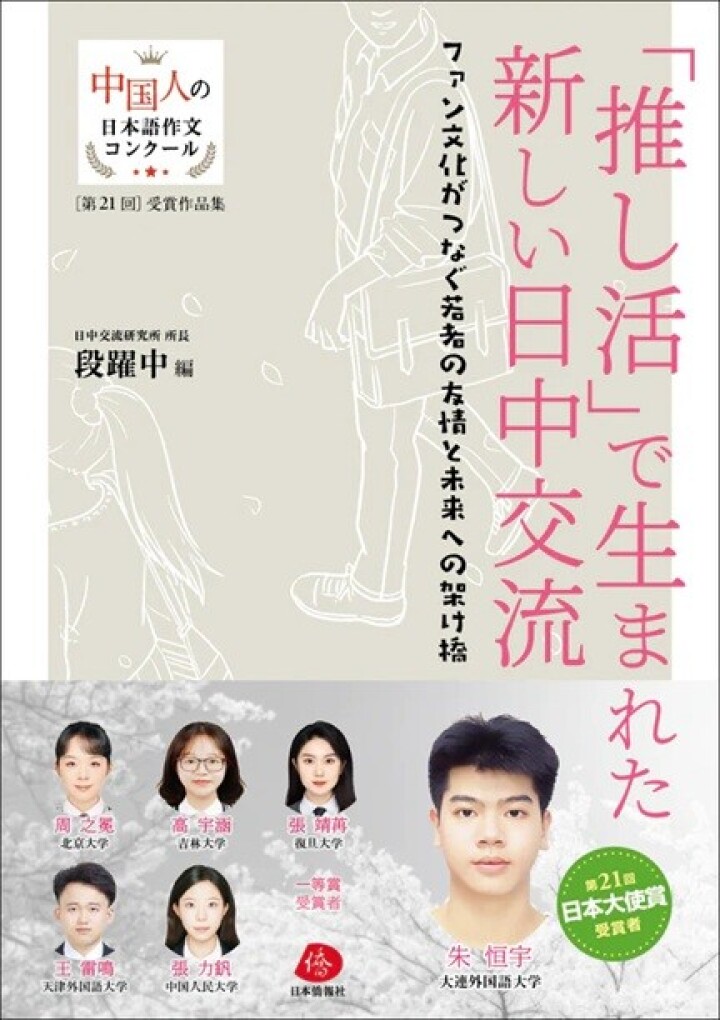
*This text is reprinted and edited from "New Japan-China Exchange Born from 'Oshi-katsu'," the collection of winning works from the 21st Japanese Essay Contest for Chinese People (edited by Duan Yuezhong, Japan Kyoho Publishing, 2025). The expressions in the text are basically as they were in the original. The essay is published with the permission of Japan Kyoho Publishing.
https://duanbooks.myshopify.com/collections/jp
Related News