Japan Holds the 'Panacea' for Semiconductors, How Will China Break Through? - Chinese Media


Enlarge
Chinese media outlet Zhengjieju published a commentary article on the 29th titled 'Japan Holds the 'Panacea' for Semiconductors, How Will China Break Through?'
(1 / 2 images)
Chinese media outlet Zhengjieju published a commentary article on the 29th titled 'Japan Holds the 'Panacea' for Semiconductors, How Will China Break Through?'
【その他の写真】
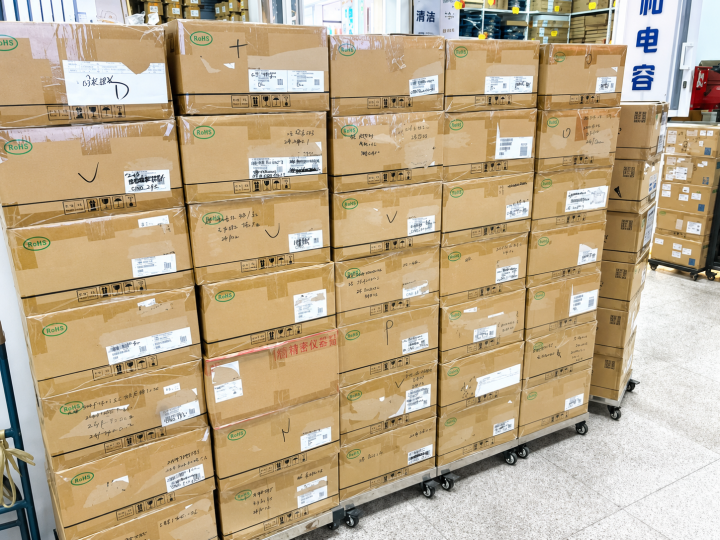
The article explained that against the backdrop of expanding demand for components for AI (Artificial Intelligence) servers, the price of multi-layer ceramic capacitors (MLCCs) has surged. In Huaqiangbei (electronics market) in Shenzhen, China, and electronic markets in Shanghai, prices are reportedly 3 to 5 times higher than at the beginning of the year, with a situation where 'prices change every day, sometimes every hour.'
MLCCs are extremely small electronic components, but they are indispensable for products equipped with electronic circuits such as smartphones, automobiles, servers, and industrial equipment. Especially in AI servers, a large number of MLCCs are required due to the increasing performance of GPUs, CPUs, and high-bandwidth memory (HBM). For example, NVIDIA's GB200 uses approximately 6,500 MLCCs on a single board, and the next-generation Rubin could see this increase to about 12,000 units.
The article pointed out that 'while the principle of MLCCs themselves is simple, it is not easy to simultaneously achieve miniaturization, high capacitance, and high reliability.' It added, 'Japanese companies have led the global market in this field for many years,' explaining that 'in terms of global market share in 2024, Murata Manufacturing accounts for about 32%, Taiyo Yuden about 11%, and TDK and Kyocera each about 6%, with Japanese companies as a whole reaching about 55%. For high-capacitance products for AI servers, Japanese companies are said to hold about a 70% share.'
The article then listed three reasons why Japanese companies have maintained their advantage. The first reason is material technology, explaining that 'the performance of MLCCs depends on the composition of ceramic materials centered on barium titanate, particle size, impurity management, sintering conditions, and more. Japanese companies have accumulated material technologies tailored to various applications over decades.'
The second reason is precise manufacturing technology, explaining that 'MLCCs increase capacitance by layering, but as the number of layers increases and thickness decreases, manufacturing difficulty rises. TDK has achieved products with approximately 1,000 layers, while high-capacitance products from Chinese manufacturers are mainly around 500 layers.'
The third reason is long-term relationships with customers, stating that 'since thousands of MLCCs are used in AI servers and automobiles, a single defect can affect the entire product. Therefore, customers tend to prioritize quality and stability over price and continue to do business with certified and proven manufacturers.'
The article, on the other hand, stated that there are also growth opportunities for Chinese companies, emphasizing that 'much of the new demand, such as for AI servers, new energy vehicles, satellite internet, and low-altitude economy, is emerging in the Chinese market. Electric vehicles (EVs) use approximately 18,000 MLCCs per vehicle, reaching about six times that of gasoline cars. Currently, Chinese manufacturers hold about a 5-10% share of the global market and are continuing to develop even higher-performance products.'
Furthermore, while stating that 'China accounts for about 70% of global rare earth production and over 90% in refining, giving it an advantage in materials used for high-performance MLCCs,' the article argued that 'resources alone do not constitute competitiveness; strengthening the entire industry, including material development, manufacturing technology, yield improvement, and customer certification, is necessary.' (Translation/Editing by Kitada)
Related News
China's automobile exports expected to exceed 10 million units for the full year.
CGTN Japanese
2026/10/16