Chinese Brands Capture South Koreans' Hearts Even Amid Rising Anti-China Sentiment —Singaporean Media


Enlarge
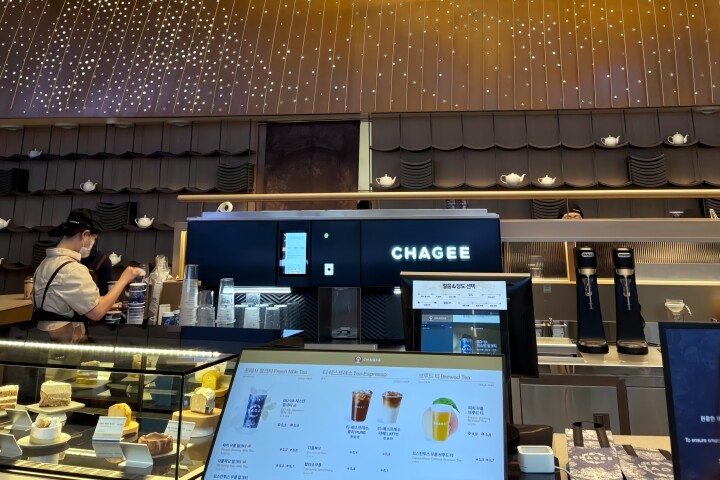
Singaporean media Lianhe Zaobao on the 12th published an article about South Korea stating, "Even amid rising anti-China sentiment, Chinese brands are capturing the hearts of South Koreans." The photo shows a CHAGEE store in South Korea.
(1 / 2 images)
Singaporean media Lianhe Zaobao on the 12th published an article about South Korea stating, "Even amid rising anti-China sentiment, Chinese brands are capturing the hearts of South Koreans."
【その他の写真】
The article reported that the Chinese tea drink brand "CHAGEE" (覇王茶姫) officially entered the South Korean market at the end of April, simultaneously opening three stores in commercial areas of Seoul, and even by June 30th, two months later, its popularity continued, with queues of mainly young people forming in front of the stores.
It then pointed out, "Previously, when South Korean consumers heard 'Chinese brand,' the first things that came to mind were low prices and high cost-performance. However, now, what attracts young people are elements such as design aesthetics, sense of beauty, the atmosphere of the store space, and the brand experience." It reported, "By queuing for milk tea and sharing photos of their store visits on social media, Chinese brands are gradually becoming an indispensable part of South Korean youth's daily consumption habits."
And it stated that one of the triggers for South Korean youth to recognize Chinese brands was their experiences traveling in China, and following China's introduction of a visa exemption measure in November 2024 for South Koreans traveling for tourism or business purposes for up to 30 days, the hurdle for traveling to China significantly decreased. It reported that South Koreans who previously preferred Japan and Southeast Asia now add Chinese cities like Shanghai, Chongqing, and Qingdao to their list of potential travel destinations.
It also mentioned that Chinese products such as BYD electric vehicles (EVs) and smart vacuum cleaners from Roborock and Dreame are gaining a presence in the South Korean market.
On the other hand, it pointed out, "In contrast to the rising popularity of Chinese brands, negative perceptions of China in South Korean society have deepened in recent years." It reported that in a 2025 survey by the East Asia Institute, a private South Korean think tank, the percentage of respondents who answered that their impression of China was "bad" or "generally bad" reached 71.5%, a high level second only to North Korea, and particularly highlighted that such negative sentiments are strong among those in their 20s and 30s.
And, quoting Professor Ha Nam-seok of the Chinese Language and Culture Department at the University of Seoul, who has long researched anti-China sentiment in South Korea, it stated, "The increase in the competitiveness of Chinese brands and the intensification of anti-China sentiment in South Korean society are actually two sides of the same coin. China's rapid rise in fields such as EVs, batteries, home appliances, and artificial intelligence (AI) is making South Korean society feel competitive pressure. Coupled with the strategic competition between the US and China and the expansion of China-related issues in South Korean domestic politics, negative sentiments are further intensifying. Nevertheless, what South Korean consumers experience in actual purchasing activities is increasingly diverging from perceptions at the political level. The China discussed in political discourse and the China that consumers encounter through brands are not the same," it reported. (Translation/Editing: Yanagawa)
Related News